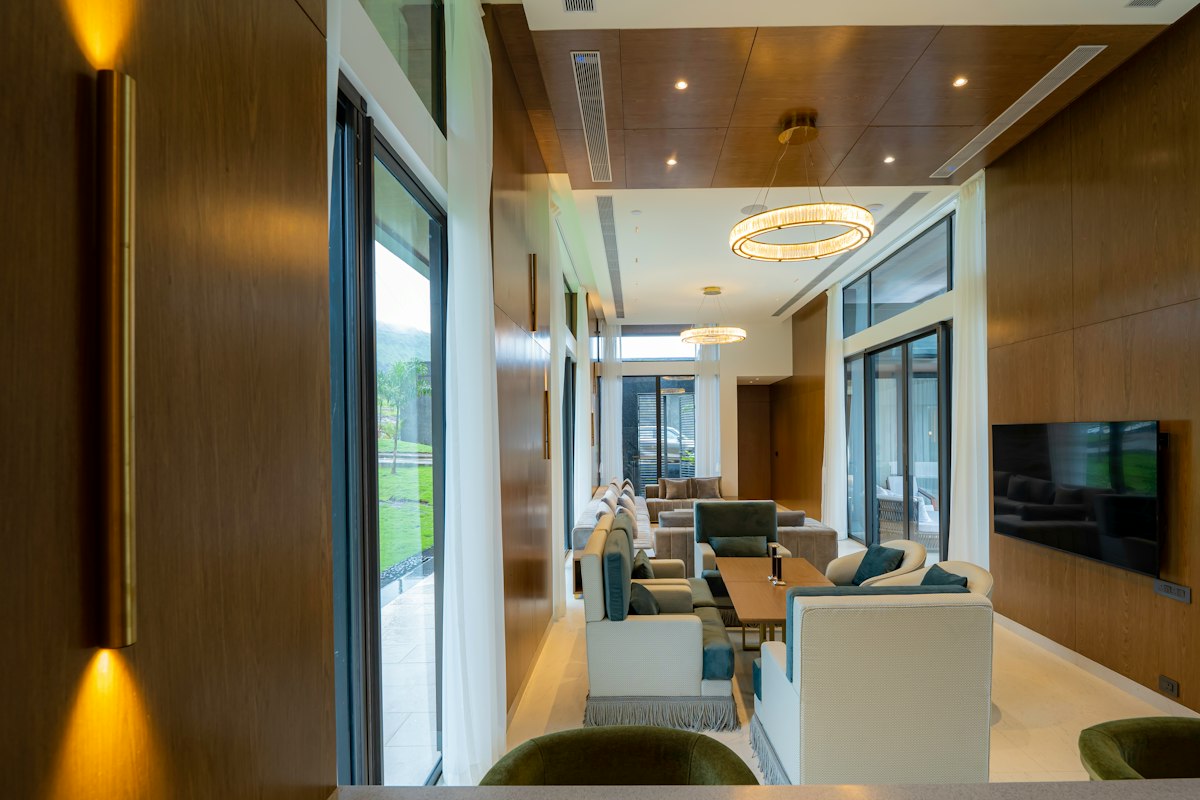
Modernizing Luxury Estates: Home Automation Retrofit for Existing Villas
Living in an established villa often brings a sense of character and space that newer builds struggle to replicate. However, the convenience of modern living frequently hits a wall—literally—when homeowners consider the thick masonry and complex legacy wiring of older structures. The desire to modernize doesn't have to mean a full-scale renovation or tearing down expensive plasterwork. Home automation retrofit for existing villas offers a sophisticated path to integrating intelligence into your living space without the chaos of a construction site.
The primary challenge for most villa owners is the transition from traditional, manual systems to an integrated digital environment. You might be dealing with outdated lighting circuits, independent air conditioning units that don't communicate, and security systems that feel like relics from a different era. Retrofitting allows you to bridge this gap by utilizing wireless protocols and clever hardware swaps that fit directly into your existing infrastructure. This approach preserves the architectural integrity of your home while providing the comfort and efficiency of a 21st-century smart home.
Related posts
Professional Automated Sliding Gate Barrier Installation Requirements and Best Practices
Securing a property perimeter starts with a robust physical barrier, but the transition from a manual gate to...
Read more →
Advanced Perimeter Defense: AI-Powered CCTV Security Solutions
The feeling of absolute security on your property isn't just a luxury; it's a fundamental expectation. For years,...
Read more →
High-Performance Connectivity: Integrating Wireless Mesh and Structured Cabling in Luxury Villas
Living in a sprawling villa offers unmatched comfort, but it often presents a significant technological hurdle: consistent connectivity....
Read more →
Precision Engineering: Installing Heavy-Duty Motorized Curtain Tracks
When your design vision calls for expansive, luxurious drapes, or perhaps robust blackout curtains for a dedicated media...
Read more →This discussion explores the practicalities of upgrading your estate, focusing on the technologies that work best in large, multi-room environments. We will look at climate control, lighting, security, and specialized entertainment zones. By the end, you will understand the logistics of a retrofit project, the expected costs, and the technical hurdles specific to large-scale residential properties. Whether your goal is energy savings or purely lifestyle enhancement, the path to a smarter villa is more accessible than it has ever been.
Key takeaways
- Wireless protocols are essential: Technologies like Zigbee and Z-Wave create mesh networks that overcome the signal-blocking nature of thick villa walls without needing new cables.
- Focus on the wall box: Replacing standard switches with smart modules or smart dimmers is the most effective way to gain control over existing lighting circuits.
- Integrated climate management: Retrofitting smart thermostats and AC controllers can significantly reduce energy bills in large properties by automating cooling based on occupancy.
- Phased implementation: You can modernize room by room, starting with high-traffic areas or entertainment zones, to manage budget and minimize disruption.
The Architecture of a Retrofit Project
When approaching a home automation retrofit for existing villas, the first step is evaluating the "nervous system" of the house. In a new build, installers run miles of low-voltage cabling behind the walls. In a retrofit, we rely on the power lines already in place. The magic happens at the endpoints—the switches, the outlets, and the ceiling roses. By installing small, puck-sized relay modules behind your existing designer switches, you maintain the aesthetic look of your home while adding remote control and automation logic.
Connectivity is the second pillar of a successful retrofit. Standard Wi-Fi often fails in large villas due to interference and range limitations. A robust retrofit strategy utilizes a dedicated smart home hub that speaks multiple languages. Zigbee and Z-Wave are preferred because every powered device acts as a repeater, strengthening the signal as it travels from the ground floor to the upper suites. This mesh architecture ensures that a command sent to a garden light doesn't get lost in transit.
Intelligent Lighting Without Rewiring
Lighting defines the mood of a villa, but traditional setups often lead to "wall acne"—clusters of five or six switches that are impossible to remember. Retrofitting smart lighting allows you to consolidate these into elegant keypads or simply automate them based on the time of day. Instead of pulling new wires, you replace the internal components of the switch. This allows for features like "Path of Light," where sensors detect your movement at night and dimly light the way to the kitchen or bathroom.
Dimmable circuits in older villas can sometimes be temperamental with LED bulbs. A professional retrofit involves installing high-quality dimming modules that can be calibrated to prevent flickering. This level of control extends to the exterior as well. Landscape lighting can be programmed to follow the astronomical clock, turning on at sunset and off at sunrise, or dimming to 20% after midnight to save energy while maintaining security.
Climate Control and Energy Efficiency
Large villas are notoriously expensive to cool or heat. In many existing properties, the HVAC system is controlled by basic dial thermostats or individual remote controls for each room. Retrofitting these with smart controllers provides a centralized view of the entire home's climate. You can set schedules that ensure the guest wing is only cooled when visitors are expected, or that the master suite reaches the perfect temperature just as you arrive home from work.
For villas with split units or VRF systems, infrared (IR) or cloud-based bridge devices can be installed. These devices mimic the signals of your existing remotes but connect them to your home's central intelligence. When combined with window and door sensors, the system can automatically turn off the AC in a room if a balcony door is left open, preventing massive energy waste. Over a few years, the savings on utility bills often cover the initial cost of the retrofit hardware.
Elevating Entertainment: Voice-controlled smart Majlis audio visual setup
In many regional villas, the Majlis is the heart of social interaction and hospitality. Modernizing this space requires a blend of high-end performance and effortless control. A Voice-controlled smart Majlis audio visual setup is a popular retrofit choice because it transforms the guest experience. Imagine entering the room and simply stating a command to dim the lights, lower the motorized shades, and activate a hidden 4K projector or a massive LED display.
The audio component of such a setup is equally important. Retrofitting high-fidelity speakers doesn't always mean cutting into the ceiling. High-end surface-mounted speakers or discreet architectural bars can be integrated into the existing decor. By using a centralized audio-over-IP system, the Majlis can be part of a whole-home audio network or operate as an independent zone. Voice control adds a layer of modern luxury, allowing the host to manage the ambiance without ever having to look for a remote or leave their seat.
Security and Access Management
Security is often the primary driver for a home automation retrofit for existing villas. Traditional alarm systems are often cumbersome and prone to false alarms. A modern retrofit replaces these with an integrated ecosystem of smart cameras, motion sensors, and smart locks. Smart locks are particularly useful for villas with staff or frequent maintenance visitors. You can issue temporary digital keys that expire after a set time, removing the need for physical key duplication and the security risks that come with it.
Video doorbells and perimeter cameras can now be installed with minimal drilling. Battery-powered options with long-life cycles or solar-charging mounts are perfect for stone or marble exteriors where running power lines is cost-prohibitive. These devices feed directly into your smartphone or a wall-mounted tablet, providing real-time alerts and the ability to speak to visitors from anywhere in the world. Integrating these with your lighting system allows for "occupancy simulation," where the house mimics your daily lighting patterns while you are away to deter potential intruders.
Overcoming Structural Obstacles
The thick concrete and rebar common in villa construction are the natural enemies of wireless signals. To ensure a seamless retrofit, you must plan for signal dead zones. This is where a professional site survey becomes invaluable. Installers will often place multiple access points and hubs strategically to ensure every corner of the property is covered. Using wired backhauls—utilizing existing Ethernet ports or even Powerline adapters—can help bridge the gap between different floors of the villa.
Another obstacle is the depth of existing wall boxes. Older villas may have shallow boxes that don't easily accommodate bulky smart modules. In these cases, the solution involves using ultra-slim hardware or replacing the entire switch plate with a smart-integrated version. It is a technical challenge, but with the right hardware selection, almost any wall can be made smart without structural damage.
Budgeting and Implementation Strategy
A full home automation retrofit for existing villas can range significantly in price depending on the complexity and the brands chosen. A basic setup focusing on lighting and security for a standard five-bedroom villa might start in the mid-range of four figures, while a comprehensive, high-end system with a Voice-controlled smart Majlis audio visual setup and full HVAC integration can reach much higher. The beauty of the retrofit model is the ability to scale. You don't have to do everything at once.
Start with the infrastructure: a powerful router and a versatile smart home hub. From there, move to the rooms where you spend the most time. Once the lighting is automated, adding sensors or climate control is a simple matter of pairing new devices to the existing hub. This modular approach allows you to learn the system and refine your automation logic as you go, ensuring that the final result truly enhances your daily routine rather than complicating it.
FAQ
Will retrofitting smart home technology damage my villa's walls?
No, the primary goal of a retrofit is to avoid structural damage. Most modern smart home components are designed to fit into existing electrical backboxes or use wireless communication. This eliminates the need for chasing walls or running new conduits through your masonry. If a wall box is too shallow, there are surface-mounted or slim-profile alternatives that remain non-invasive.
How long does a typical villa retrofit take to install?
The timeline depends on the scope of the project. A basic lighting and security setup for a large villa can often be completed in 3 to 5 days. A more complex project involving multi-zone audio, HVAC integration, and a specialized Majlis setup might take 2 weeks. Because there is no major construction involved, the home remains livable throughout the process.
Can I still use my physical switches after the retrofit?
Absolutely. A well-designed retrofit ensures that your physical switches continue to work as they always have. The smart functionality is added in parallel, meaning you can use the wall switch, a smartphone app, or voice commands interchangeably. This is a critical factor for guests or family members who may prefer traditional controls.
What happens if the internet goes down?
High-quality retrofit systems, particularly those using Zigbee, Z-Wave, or local processing hubs, do not rely on the internet for basic functionality. Your lights, switches, and automated schedules will continue to work locally. You would only lose remote access (controlling the home while away) and voice assistant features that require cloud processing until the connection is restored.
Is it possible to take the system with me if I move?
One of the advantages of a retrofit is portability. Since the modules are installed behind switches and the devices are often wireless, you can technically remove them and reinstall your original switches if you decide to sell the villa. However, a smart-enabled villa often has a higher market value, so many homeowners choose to leave the system in place as a premium selling point.
Conclusion
A home automation retrofit for existing villas is the most practical way to enjoy modern luxury without the headaches of a full renovation. By focusing on wireless mesh networks, smart switch modules, and integrated climate control, you can transform an older property into a high-performance estate. The ability to add specialized zones, such as a Voice-controlled smart Majlis audio visual setup, ensures that your home remains a center for both comfort and world-class hospitality. As technology continues to evolve, the modular nature of retrofitting means your villa will never be left behind, allowing you to add new features and capabilities whenever you choose.