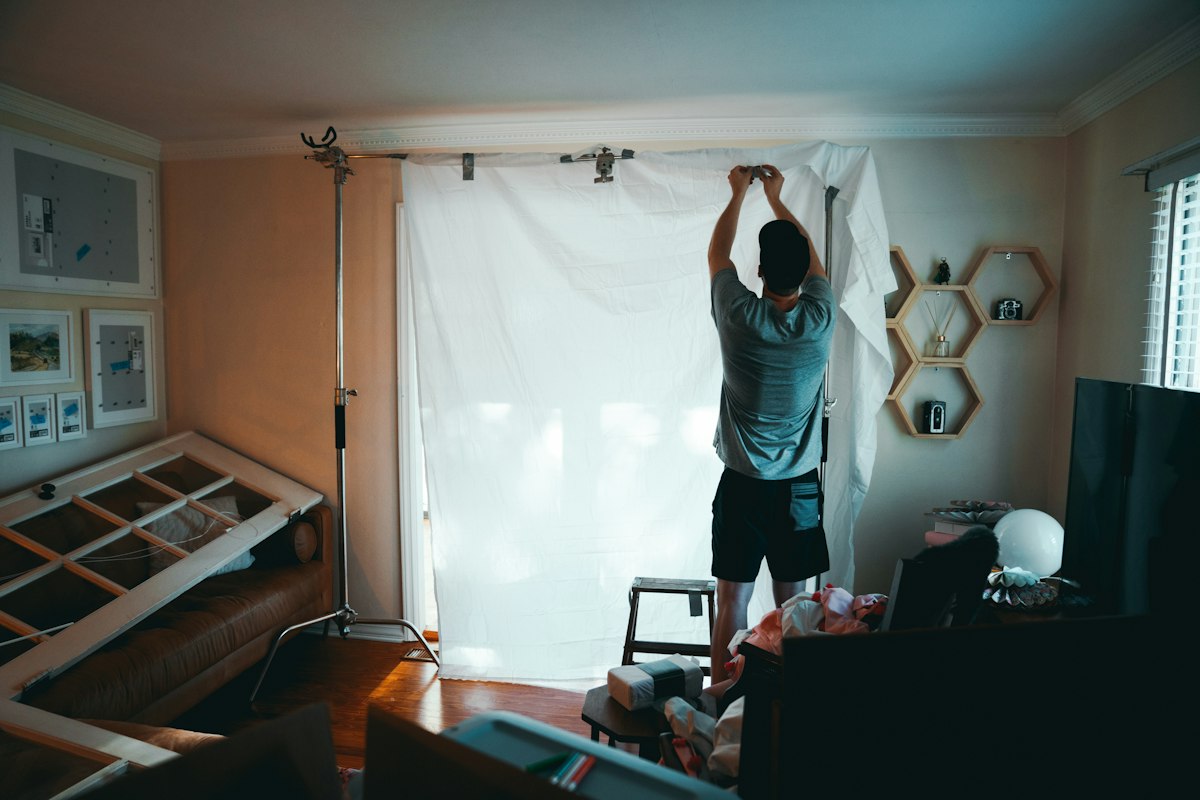
Precision Engineering: Installing Heavy-Duty Motorized Curtain Tracks
When your design vision calls for expansive, luxurious drapes, or perhaps robust blackout curtains for a dedicated media room, the sheer weight and scale often present a significant challenge. Manual operation becomes cumbersome, even impractical, and standard curtain rods simply won't suffice. This is precisely where heavy-duty motorized curtain track systems step in, transforming the management of substantial window treatments from a chore into an effortless, sophisticated experience.
These aren't your average off-the-shelf solutions. We're talking about robust engineering designed to handle considerable loads, ensuring smooth, quiet operation day after day. The complexity involved in these installations goes far beyond hanging a simple rod; it encompasses precise measurements, structural considerations, electrical integration, and often, sophisticated smart home synchronization.
Related posts
Modernizing Luxury Estates: Home Automation Retrofit for Existing Villas
Living in an established villa often brings a sense of character and space that newer builds struggle to...
Read more →Professional Automated Sliding Gate Barrier Installation Requirements and Best Practices
Securing a property perimeter starts with a robust physical barrier, but the transition from a manual gate to...
Read more →
Advanced Perimeter Defense: AI-Powered CCTV Security Solutions
The feeling of absolute security on your property isn't just a luxury; it's a fundamental expectation. For years,...
Read more →
High-Performance Connectivity: Integrating Wireless Mesh and Structured Cabling in Luxury Villas
Living in a sprawling villa offers unmatched comfort, but it often presents a significant technological hurdle: consistent connectivity....
Read more →Understanding the intricacies before you begin is paramount. A misstep in planning or execution can lead to frustrating performance issues, premature wear, or even safety concerns. This isn't just about convenience; it's about protecting your investment in high-quality fabrics and ensuring the longevity of your automation system.
This discussion will delve into the critical aspects of professional heavy-duty motorized curtain track installation. We'll explore everything from initial assessment and power considerations to the nuances of smart home integration, offering insights that only come from hands-on experience in bringing these sophisticated systems to life.
Key Takeaways
- Accurate Load Calculation is Non-Negotiable: Overlooking the true weight of heavy drapes can lead to motor failure and track damage.
- Electrical Planning is Fundamental: Dedicated power sources and proper wiring are essential for reliable, safe operation, often requiring professional electrical work.
- Integration Enhances Experience: Seamless connection with smart home ecosystems elevates convenience and functionality.
- Professional Expertise Delivers Value: Precision, safety, and optimal performance are best achieved through experienced installation.
Understanding Heavy-Duty Systems
Before any tools come out, it's crucial to understand what truly defines a heavy-duty motorized curtain track system. This isn't merely a marketing term; it refers to a specific class of equipment engineered for demanding applications.
What Defines "Heavy-Duty"?
At its core, a heavy-duty system is characterized by its capacity to manage significant weight and size without strain. This involves several key components:
- Motor Strength: The motor is the heart of the system. Heavy-duty motors possess higher torque, allowing them to effortlessly pull substantial curtain loads over long distances. They are often designed for continuous, quiet operation.
- Track Robustness: The track itself is constructed from thicker, more resilient materials, typically extruded aluminum, to prevent bending, sagging, or warping under the weight of heavy fabrics. The profile is engineered for minimal friction.
- Carrier and Runner Design: The components that hold and move the curtain along the track are reinforced. They feature smooth-gliding wheels or gliders, often with ball bearings, to ensure a fluid motion and distribute weight evenly.
- Mounting Hardware: Brackets and fasteners are designed for superior load-bearing capacity, providing a secure anchor to the building structure.
These elements work in concert to ensure that even the most opulent or oversized drapes move with grace and reliability, year after year.
Common Applications
Where do these robust systems typically find their home? The applications are diverse, but they all share a common need for strength and automation:
- Expansive Windows and Glass Walls: In modern architecture, large windows are a design statement. Heavy drapes here require a system that can handle their considerable dimensions and weight.
- Home Theaters and Media Rooms: Blackout curtains are essential for optimal viewing. These often involve multiple layers of heavy, sound-absorbing fabric that demand powerful motors.
- Commercial and Hospitality Settings: Hotels, conference rooms, and restaurants frequently utilize large, elaborate draperies that benefit from automated control for ease of use and aesthetic appeal.
- Stage Curtains: While a specialized niche, the principles of heavy-duty motorized tracks are directly applicable to the robust systems needed for theatrical backdrops and stage curtains.
- High-Ceiling Installations: Reaching and manually operating curtains on very high ceilings is impractical. Motorized systems provide the perfect solution for seamless control.
The Critical Pre-Installation Phase
Successful installation begins long before any equipment arrives on site. The planning phase is arguably the most critical, laying the groundwork for a flawless system.
Accurate Measurement and Load Assessment
Precision here is paramount. We're not just measuring the window opening; we're considering the entire span the track needs to cover, the stack-back requirements, and critically, the total weight of the drapes. How heavy are those velvet blackout curtains, or the triple-layered sheers and interlined drapes? Every fabric type has a specific weight per square meter, which needs to be factored in meticulously.
Overlooking this step is a common pitfall. An under-specified motor will struggle, leading to noisy operation, overheating, and eventual failure. An under-engineered track might sag, hindering smooth movement. We use specialized tools and formulas to calculate the exact load, ensuring the motor and track selected are more than capable of the task.
Power Requirements and Wiring
Motorized tracks need power, and heavy-duty systems often require a dedicated circuit. This isn't a job for extension cords. Most systems operate on standard AC voltage (120V or 240V, depending on region), but the amperage draw must be accounted for to prevent overloading existing circuits. We carefully plan the placement of outlets, ensuring they are concealed yet accessible for maintenance.
For some installations, especially those integrating with advanced smart home systems, low-voltage wiring might be preferred, allowing for more flexible control options. This often involves collaboration with a licensed electrician to ensure all wiring meets local codes and safety standards. If you're also planning upgrades with `Smart lighting control system contractors`, it's an opportune moment to coordinate electrical needs for both systems, potentially streamlining the overall wiring process.
Track Type and Motor Selection
The choice of track depends heavily on the window's shape and the desired curtain style. Is it a straight run, or does it require a custom curve to follow a bay window? Do the curtains need to open from the center, or stack to one side? These decisions dictate the track profile and the number of motors required.
Motor selection goes beyond just power. We consider factors like noise levels (crucial for bedrooms or media rooms), speed of operation, and integrated control options. Some motors offer built-in radio frequency (RF) receivers for remote control, while others are designed for direct integration into home automation platforms, offering granular control via apps or voice commands.
Mounting Surface Evaluation
A heavy track with heavy curtains exerts considerable force. The mounting surface—whether it's drywall, plaster, wood, or concrete—must be able to safely bear this load. We meticulously locate studs for wall mounts or reinforce ceiling structures as needed. For false ceilings or unusual architectural features, custom blocking or brackets might be necessary to ensure a secure, long-lasting installation. Compromising here is not an option; safety and stability are paramount.
The Installation Process: A Step-by-Step Overview
With meticulous planning complete, the physical installation can begin. This phase requires precision, attention to detail, and a thorough understanding of the specific system components.
Mounting the Brackets and Track
The first step involves accurately marking and securely fastening the mounting brackets. These are the anchors that hold the entire system. We use laser levels to ensure every bracket is perfectly aligned, guaranteeing a level track that allows for smooth curtain movement. Once the brackets are secure, the track sections are carefully assembled and clicked into place. Any slight misalignment can lead to friction, noise, and premature wear on the motor and carriers.
Motor Integration and Wiring Connection
The motor is then carefully integrated into the track system, typically at one end or centrally, depending on the track design and curtain stack. Electrical connections are made according to manufacturer specifications and local electrical codes. This involves routing power cables discreetly, often within wall cavities or specialized raceways, to the prepared power source. Safety checks are performed to ensure all connections are secure and properly insulated.
Curtain Attachment and Limit Setting
Once the track and motor are in place, the curtains are attached to the carriers. This is where the system truly comes to life. Following attachment, the crucial step of setting the motor's open and close limits begins. This programming tells the motor exactly how far to travel, ensuring the curtains open fully without overstretching and close completely without bunching or leaving gaps. Precision in limit setting is key to the aesthetic and functional performance of the system.
Testing and Calibration
A comprehensive testing phase follows. We run the curtains through multiple full open and close cycles, observing their movement for any hitches, hesitations, or unusual noises. Adjustments are made to limit settings, motor speed, or track alignment as needed. This calibration ensures silent, fluid operation and confirms that the system is performing optimally under its full load. Only when every aspect of the movement is perfect is the installation considered complete.
Smart Home Integration and Control
One of the most compelling advantages of motorized curtain tracks is their ability to integrate seamlessly into a broader smart home ecosystem. This connectivity elevates convenience and opens up a world of automation possibilities.
Seamless Automation Possibilities
Imagine your curtains automatically opening with the sunrise to gently wake you, or closing at sunset for privacy and energy efficiency. With smart integration, these scenarios become reality. Timers, custom scenes, and schedules can be programmed through a central smart home hub. You can create a 'movie night' scene that dims the `Smart lighting control system contractors` lights, lowers your projection screen, and closes the blackout curtains with a single command.
Interoperability with Other Systems
Modern homes are increasingly interconnected. Motorized curtain tracks can communicate with a variety of other smart devices. For example, linking them to your `Whole villa mesh Wi-Fi and structured cabling` system ensures robust connectivity and reliable communication across your property. Integration with security systems, like `AI perimeter CCTV security camera systems`, can allow curtains to close automatically if a security breach is detected, adding an extra layer of privacy and protection.
Consider tying your curtains into your `Biometric smart door lock for main gates` or `Automated sliding gate barrier installation`. As you arrive home and unlock your gate, your curtains could automatically open to welcome you, creating a truly personalized living experience. The possibilities are extensive, limited only by the capabilities of your smart home platform.
Remote Access and Security
Beyond automation, smart integration provides remote access. You can open or close your curtains from anywhere in the world using your smartphone, offering peace of mind when you're away. This can simulate occupancy, deterring potential intruders, and allows you to react to unexpected weather changes, protecting your interiors from excessive sun exposure or heat loss. This level of control isn't just about luxury; it's about enhanced convenience and security.
Why Professional Installation Is Paramount
While the idea of a DIY project can be appealing, the installation of heavy-duty motorized curtain tracks is genuinely a task best left to seasoned professionals. The complexity and potential for error are too significant to risk.
Avoiding Costly Mistakes
Incorrect measurements, improper wiring, or inadequate structural support can lead to a cascade of problems. These range from the motor failing prematurely, the track sagging, or the curtains moving unevenly, to potentially dangerous electrical faults. Rectifying these issues after the fact often involves significant additional cost, time, and frustration, far exceeding the initial expense of professional services.
Ensuring Safety and Longevity
Heavy drapes and motorized systems represent a considerable weight. Proper installation ensures that this weight is safely distributed and securely anchored to the building structure, eliminating any risk of the track detaching. Furthermore, correct electrical wiring and motor calibration are critical for operational safety and to maximize the lifespan of the entire system, preventing overheating or undue stress on components.
Optimizing Performance and Integration
Professionals bring a depth of knowledge regarding the nuances of different motor types, track systems, and control protocols. They can troubleshoot unforeseen challenges, program complex limit settings, and seamlessly integrate the system into your existing smart home network, ensuring all components communicate effectively. This expertise translates directly into quiet, smooth, and reliable performance that meets your expectations.
Warranty and Support
Most manufacturers' warranties for motorized track systems are contingent upon professional installation. Attempting a DIY setup might void your warranty, leaving you without recourse if a component fails. Professional installers also offer post-installation support, providing peace of mind that any issues will be promptly addressed, and your investment is protected for the long term.
Commercial Considerations and Project Scope
Engaging with a professional for your heavy-duty motorized curtain track project involves more than just the installation itself. Understanding the commercial aspects and project scope helps manage expectations and ensures a smooth process.
Budgeting for Quality
Heavy-duty motorized curtain tracks are an investment in both luxury and functionality. Pricing varies significantly based on track length, motor power, material quality, and the complexity of smart home integration. While it's tempting to seek the lowest bid, remember that quality materials and expert installation contribute to the system's longevity and reliability. A detailed quote should break down costs for materials, labor, and any necessary electrical work. Consider this an enhancement to your property's value and comfort, rather than just a simple purchase.
Timeline Expectations
The timeline for these projects can vary. Initial consultations, site surveys, and precise measurements take time. Custom track fabrication, especially for curved windows, can add to the lead time. The installation itself requires careful attention to detail. Expect a realistic timeline that accounts for each phase, from planning and procurement to installation and final calibration. Rushing the process often compromises quality.
Post-Installation Support
A reputable installer will offer comprehensive post-installation support. This includes demonstrating the system's full functionality, providing user manuals, and explaining any maintenance requirements. Furthermore, a good service provider will be available for troubleshooting, adjustments, or future upgrades. Understanding the scope of this support upfront ensures you have a reliable partner for the lifespan of your motorized curtain system.
FAQ
What makes a curtain track "heavy-duty"?
A "heavy-duty" track is engineered with stronger motors, more robust track materials (often extruded aluminum), and reinforced carriers and mounting hardware. These components are designed to handle significantly greater curtain weight and length than standard tracks, ensuring smooth, reliable, and quiet operation for large or heavy drapes without strain or premature wear.
Can I install a motorized track myself?
While some lighter, simpler motorized tracks might be DIY-friendly, heavy-duty systems are complex. They involve precise measurements, structural integrity checks, electrical wiring, and sophisticated programming. Attempting a self-installation without specialized knowledge can lead to performance issues, safety hazards, damage to your drapes or home, and may void the manufacturer's warranty. Professional installation is strongly recommended for these systems.
How are these systems powered?
Most heavy-duty motorized curtain tracks operate on standard AC power (120V or 240V), often requiring a dedicated electrical circuit to handle the motor's power draw safely. Some systems also offer low-voltage options, which can provide more flexibility for control and integration. Power sources are typically concealed near the track and require professional electrical connection.
What kind of maintenance do motorized tracks require?
Heavy-duty motorized tracks generally require minimal maintenance. Regular dusting of the track and occasional inspection for any obstructions in the path of the carriers are usually sufficient. It's also wise to periodically check the security of the mounting hardware. Avoid applying lubricants unless specifically recommended by the manufacturer, as some products can attract dust and grime. Professional servicing can be scheduled for long-term health checks or if any operational issues arise.
Can existing curtains be motorized?
Yes, in many cases, existing curtains can be adapted for a motorized track system, provided their weight and dimensions are within the new system's capacity. The curtains would need to be removed, and their heading (the top edge) might require modification to accept the specialized carriers of the motorized track. A professional assessment is crucial to determine feasibility and any necessary alterations.
Conclusion
The decision to install heavy-duty motorized curtain tracks is a step towards a more refined, comfortable, and technologically advanced living or working environment. These systems offer unparalleled convenience and aesthetic appeal for managing substantial window treatments, transforming the way you interact with your spaces. However, the path to seamless operation is paved with precise planning, expert execution, and a deep understanding of both mechanical and electrical principles. Entrusting this specialized installation to experienced professionals ensures not only the longevity and safety of your investment but also the perfect integration into your home's smart ecosystem, delivering the sophisticated control and effortless elegance you envisioned.